
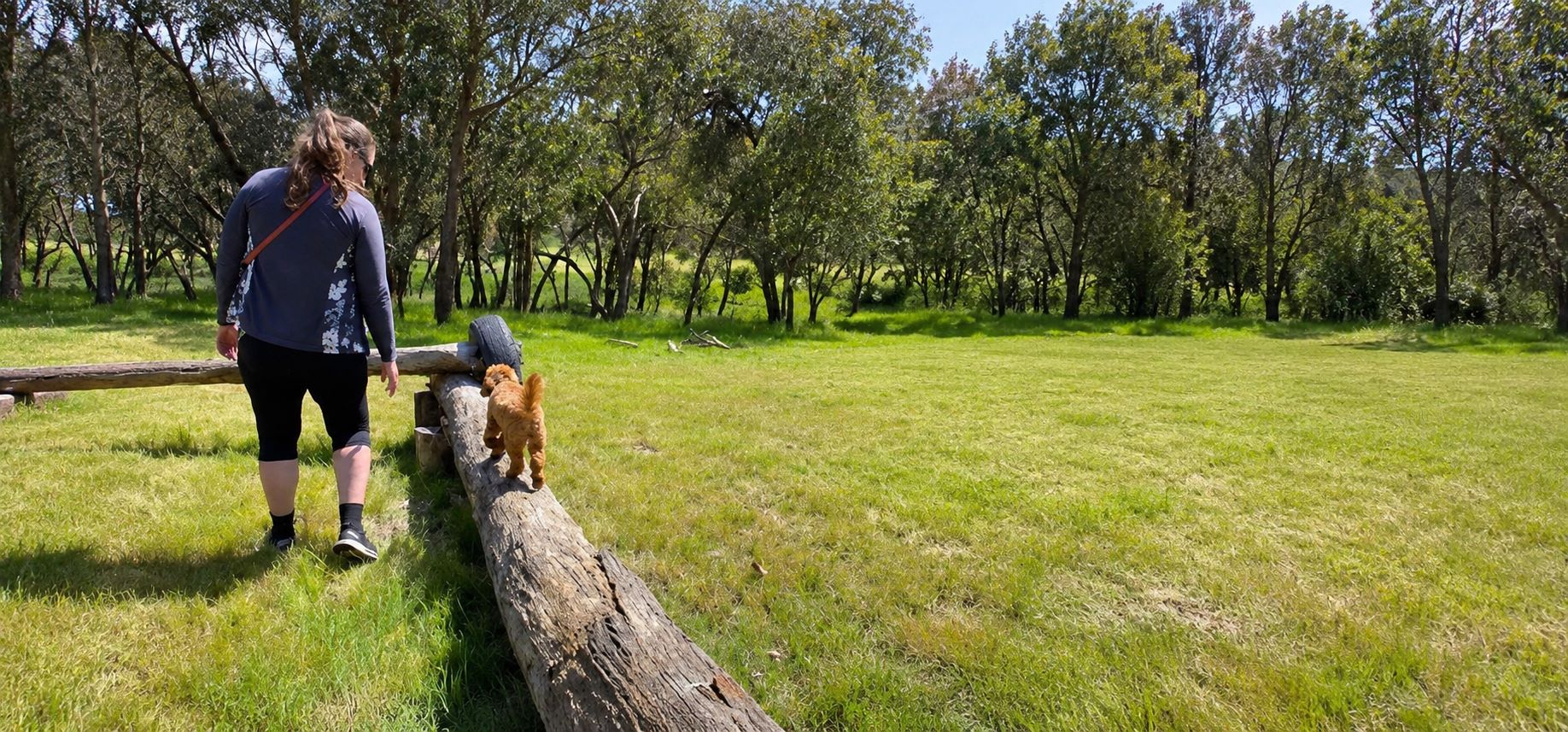

Dog parks can be one of the best ways for dogs to burn energy, socialise and explore the world around them. But they can also become stressful environments when dogs — and owners — are unprepared.
Speak to enough dog owners or professional trainers, and you’ll hear plenty of horror stories about dog fights, poor behaviour and even conflict between humans.
The truth is, dog parks are not automatically “good” or “bad”. Success depends on understanding your dog, reading the environment and following proper dog park etiquette.
Points to consider before using a Dog Park
Why Are You Taking Your Dog to the Park?
With smaller backyards becoming more common, many dogs don’t get enough physical or mental stimulation at home. Pent-up energy can create stress and frustration, which often shows up as anxiety, reactivity or poor leash behaviour during walks.
A well-managed dog park visit can provide:
- physical exercise
- mental stimulation
- social interaction
- opportunities for exploration
But not every dog is suited to every dog park environment.
Will Your Dog Cope in a Busy Environment?
Think honestly about how your dog behaves at home and on walks.
If your dog struggles with:
- boundaries at home
- leash control
- excessive reactivity
- poor recall
- overexcitement around distractions
…then an off-leash dog park may be overwhelming.
Public dog parks are highly stimulating environments. If you don’t have reasonable control in lower-distraction settings, you’re unlikely to achieve it in a crowded park.

Does Your Dog Socialise Well With Other Dogs?
Dog parks are designed for dogs to interact, explore and play together. However, dogs need to feel comfortable around a wide range of personalities and play styles.
For example:
- a nervous Border Collie may feel overwhelmed by a rough-playing Labrador
- a small anxious dog may struggle around large, excitable breeds
- some dogs simply prefer calm interactions rather than group play
Successful dog socialisation requires confidence, resilience and appropriate behaviour from both dogs and owners.
Why Basic Obedience Isn’t Always Enough
Teaching commands such as sit, stay and drop is valuable, but obedience alone will not solve every challenge inside a dog park.
Every dog owner has different expectations and training standards. Cultural differences between dogs can quickly lead to tension if owners are not actively supervising interactions.
Good judgement, awareness and emotional control matter just as much as obedience.

The Role of Responsible Dog Owners
Labelling a dog as “nervous” or “reactive” on a harness does not prevent problems in an off-leash environment.
If either you or your dog are feeling highly stressed or emotional, it may not be the right time for a dog park visit.
Building calmness, confidence and resilience at home and during everyday walks is often the best preparation before attempting busy off-leash spaces.
Dog Park Etiquette Tips
Once you feel ready, following a few simple guidelines can make the experience safer and more enjoyable for everyone.
1. Don’t Rush Straight In
When you arrive, walk your dog around the outside of the fence first.
This allows:
- your dog to observe the environment
- other dogs to greet through the fence
- you to assess the overall energy of the park
If things feel calm, enter the airlock area and pause again before releasing your dog.
If your dog appears fearful, reactive or overwhelmed, it’s better not to enter.
2. Avoid Playing Fetch in Busy Areas
Fetch can quickly create tension in shared off-leash spaces.
Ball-obsessed dogs may become possessive or reactive when other dogs approach their toy. Likewise, multiple dogs competing for the same ball can trigger conflict.
If the park is crowded, it’s often best to avoid high-arousal games.
3. Leave Food Outside the Park
Food can trigger guarding behaviour and unnecessary tension between dogs.
To avoid conflict:
- don’t bring dog treats into crowded areas
- avoid eating inside the park
- leave snacks and food in the car
4. Be Careful With Young Children and Prams
Dog parks are designed primarily for dogs to explore freely.
Not all dogs are comfortable around:
- prams
- toddlers
- loud noises
- fast movements
Even friendly dogs can become overly excited or intrusive around children.
5. Keep Moving
Standing still or sitting for long periods encourages dogs to crowd around entry points and owners.
Walking through the park helps:
- keep dogs moving
- reduce tension
- encourage exploration
- Maintain engagement with your dog
The experience should involve both the dog and the owner exploring together.
6. Stay Off Your Phone
You are responsible for supervising your dog at all times.
Dog interactions can change quickly, and distracted owners often miss early warning signs of stress or conflict.
Pay attention, stay engaged and actively monitor your dog’s behaviour throughout the visit.
Final Thoughts
Dog parks can be a fantastic outlet for the right dogs when owners approach them with awareness, preparation and realistic expectations.
Understanding dog park etiquette helps create safer, more positive experiences for everyone – dogs and humans alike.
Don’t play with your bloody phone at the park – YOU are responsible for your dogs behaviour. Supervise and interact with your dog – Don’t build on your social media profile. Published Sept 2024
