
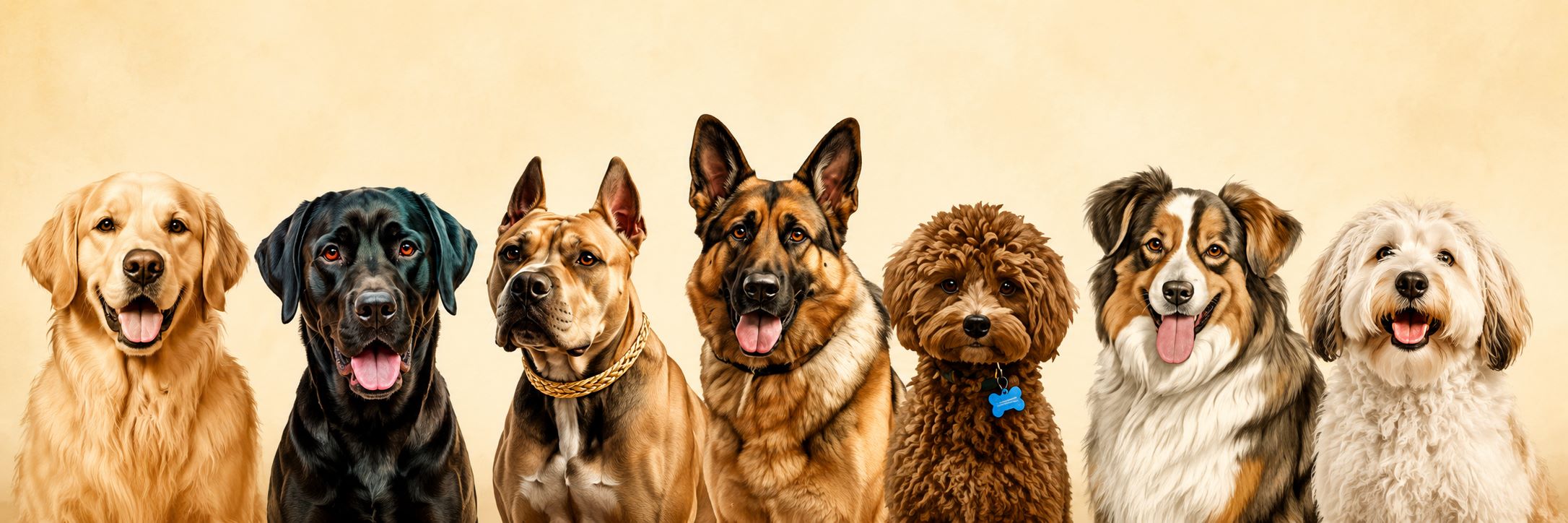

Humans have been selectively breeding dogs for generations. Over time, we’ve developed traits that suit different human needs – herding, guarding, hunting, and companionship. Then, somewhere along the line, humans also introduced dog fighting and attack work… which becomes a whole different ball game.
The result is that we now see many different types of dogs displaying very different styles of intelligence, behaviour and emotional responses.
Just like humans, dogs all process the world differently. So rather than trying to force every dog into the same training system, we need to better understand the individual dog in front of us and adjust our teaching methods accordingly.
Consider some of the following breed personality categories – but remember your own dog may not fit perfectly into any one group.
Dog Personality Types

Attention Deficit Hyperactive Dog – ADHD
(e.g. Kelpies, Border Collies, ACDs)
These are dogs who tend to become fixated – often reactive. One minute chasing flies, then barking because a branch tapped the window. They spend the day running the fence line chasing everything that moves and then stare off into the distance waiting for the next distraction.
Their brains work at such a fast pace that they often become mentally overtired… they literally cannot think straight because their brain is fried.
These characters often develop fear reactivity and become stressed or flighty, particularly when routines change or when exposed to unfamiliar environments.

The Slow Responder – Couch Potato
(e.g. Golden Retrievers, Mastiff types, Greyhounds)
This dog’s brain sits on the opposite end of the spectrum to the ADHD dog.
Although this sounds similar to the ADHD dog, these guys are more socially overexcited. They want to make friends with everyone and everything.
These are the “Happy Clowns” of the dog world.
Great fun at the party… but they often overstay their welome, and eventually both dogs and humans become overwhelmed by them.

Party Animal
(e.g. Labradors, Pointers, Boxers)
These dogs are enthusiastic learners but struggle to concentrate for long periods.
Their brain works SLOW. They often don’t immediately see what the handler is asking and can become distracted halfway through an exercise. Sometimes they simply don’t see enough value in learning new things.
These are the “Happy Clowns” of the dog world.
Great fun at the party… but they often overstay their welome, and eventually both dogs and humans become overwhelmed by them.

My Way or the Highway
(e.g. Huskies, Malamutes, Staffies, Bulldogs)
These are dogs who walk into the room wanting to take charge.
They often use a full-frontal social approach, and although they may initially seem friendly, interactions generally need to happen on their terms.
They push into personal space – both with humans and other dogs.
These personalities can become the “Bullies” of the dog world. If another dog appears nervous or unsure, the bully energy ramps up quickly and can escalate into pushing, barking or biting.

Masters of the Universe
(e.g. German Shepherds, Malinois, Rottweilers, Dobermans)
Bred with strong work drive, these dogs thrive on repetition and clear human leadership.
They generally follow direction well but prefer structure and predictability. They may not always adapt easily to rapidly changing environments.
Socially they often prefer to sit back and observe – usually with a fairly judgmental opinion of everything happening around them.
When meeting people they may be approachable… but not necessarily friendly.
Their strong presence alone can intimidate other dogs and they often react poorly to erratic or silly behaviour.

Spoilt Prince & Princesses
(e.g. Poodles, Maltese, Oodles)
These are the Instagram Stars.
They often have very little work drive and would happily spend all day sitting on the couch looking fabulous.
In some respects they don’t always behave like “real dogs” and often display more cat-like traits:
- selective listening
- emotional sensitivity
- judgmental behaviour
- social independence
When challenged they may:
- sulk
- avoid
- bark
- nip when frustrated

The Good Mate
(e.g. Australian Shepherds and many Sporting Terriers)
These are the dogs who arrive all guns blazing and ready to take on the world.
Often, they strike a good balance between body and mind, staying focused without becoming overly fixated.
They enjoy having a job to do but still adapt well to new situations, people and dogs.
It could be argued that these are the dogs whose brains work at a pace most similar to that of many humans, which may explain why communication with them often feels easier.
Love the Dog You Have
At the end of the day, every dog is an individual.
Breed tendencies can help us understand behaviour, but they should never completely define the dog standing in front of you.
The key is learning to respect the individual, understand how their brain works, and build the best relationship possible for both the dog and the owner.
Love the dog you have – but respect the individual and make the best relationship for all.
